




Microsoft Project vs Asana vs Monday.com: Best Project Management Tool

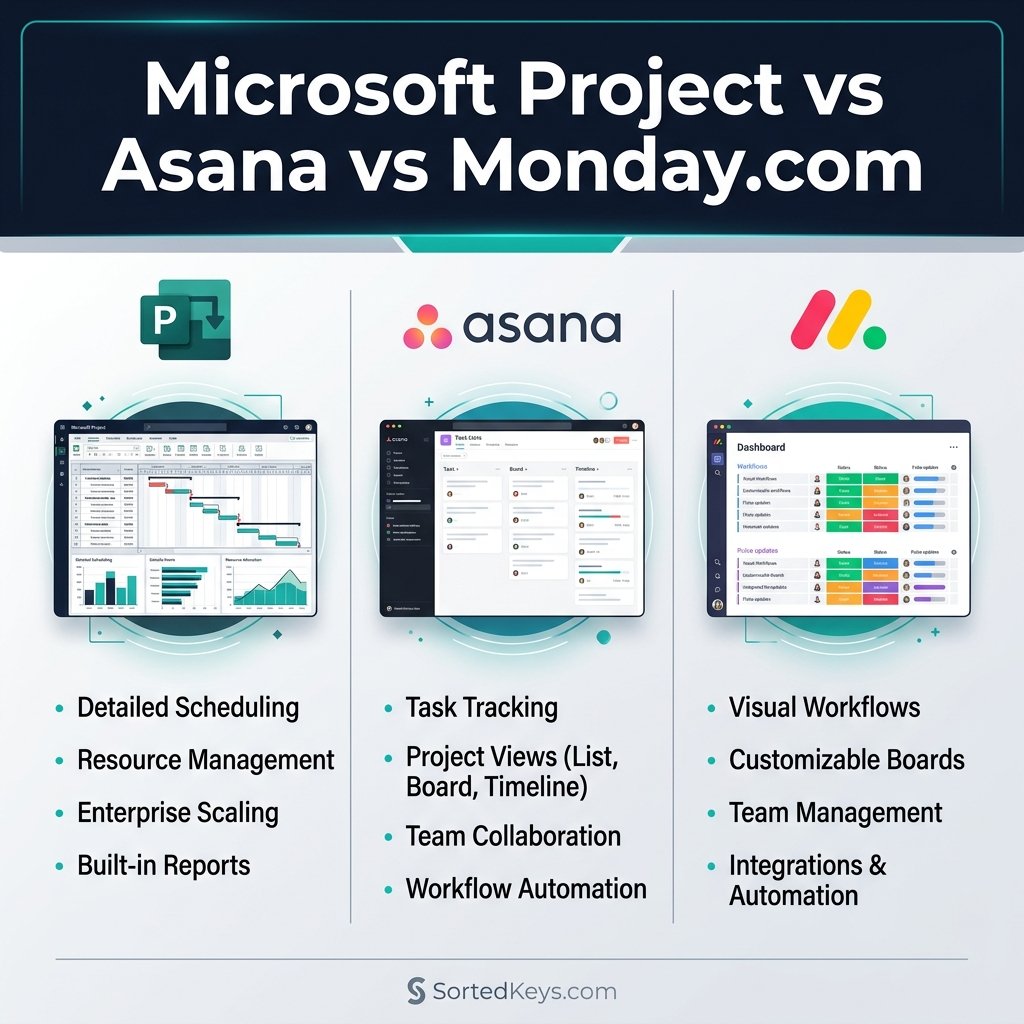
The short answer: If your team needs a simple, highly visual way to track basic daily tasks, Asana and Monday.com are excellent choices. However, if you are managing complex construction, engineering, or IT infrastructure projects that require deep resource allocation, precise Gantt chart dependencies, and advanced budget tracking, Microsoft Project is in a league of its own. Furthermore, Microsoft Project can be purchased as a one-time perpetual license, freeing you from the expensive monthly SaaS subscriptions that Asana and Monday.com require.
1. Microsoft Project: The Enterprise Heavyweight
Microsoft Project is the gold standard for traditional project management. While newer SaaS tools focus on “work management” and simple checklists, Microsoft Project is designed for certified Project Management Professionals (PMPs) who need absolute control over timelines and budgets.
- Advanced Resource Management: You can assign costs to specific resources (labor, materials) and track them down to the hour. If a task is delayed, MS Project automatically recalculates the entire project budget.
- Complex Dependencies: While other tools offer basic “finish-to-start” dependencies, MS Project allows for intricate lead and lag times across thousands of interconnected tasks.
- One-Time Purchase Option: Unlike modern SaaS tools, you can buy a perpetual license for Microsoft Project and own it forever, running it securely offline.
Stop Paying Monthly Per-User Subscriptions
SaaS tools charge you every single month for every user. You can eliminate those recurring costs by purchasing a lifetime license for Microsoft Project Professional.
Buy Project 2021 Pro Buy Project 2024 Pro2. Asana: The Agile Task Manager
Asana is designed to be beautiful, intuitive, and highly collaborative. It is the perfect tool for marketing teams, HR departments, and creative agencies.
The Pros of Asana
Asana’s UI is incredibly easy to learn. You can view projects as Lists, Kanban boards, or basic timelines. It integrates with almost everything (Slack, Google Drive, Zoom) and makes assigning tasks to team members frictionless.
The Cons of Asana
Asana struggles with strict, traditional project management (Waterfall methodology). It lacks the deep financial tracking and advanced resource leveling required for massive, multi-year infrastructure projects.
3. Monday.com: The Visual Workspace
Monday.com brands itself as a “Work OS.” It is highly customizable and relies on a very colorful, spreadsheet-like interface.
- Highly Customizable: You can build almost anything in Monday.com, from CRM pipelines to bug trackers and content calendars.
- Automations: It features a powerful, easy-to-use automation engine (“If status changes to ‘Done’, notify the manager”).
- The Catch: Like Asana, Monday.com gets very expensive, very fast. You are locked into a tiered monthly subscription plan, and some of the best features are hidden behind the highest pricing tiers.
4. The Verdict: Which Should You Choose?
If you need flexible, collaborative task management for remote teams doing creative or marketing work, Asana or Monday.com will serve you well, provided you are willing to accept the ongoing SaaS subscription costs.
If you are managing strict timelines, engineering blueprints, construction budgets, or IT deployments, Microsoft Project Professional is mandatory. For maximum efficiency, we highly recommend looking at our Project and Visio Professional Bundle to get both the ultimate project management tool and the ultimate diagramming software in one package.
Frequently Asked Questions (FAQ)
Does Microsoft Project integrate with Microsoft Teams?
Yes! Microsoft Project integrates seamlessly with Microsoft Teams, Office 365, and SharePoint, allowing you to share timelines and tasks directly within your existing communication channels.
Is Microsoft Project a monthly subscription?
It can be, but it doesn’t have to be. While Microsoft offers “Project Plan 1” and “Plan 3” as subscriptions, you can also purchase a permanent, lifetime license (like Project Professional 2021) to avoid monthly fees entirely.
Can Asana replace Microsoft Project?
For light task management, yes. However, Asana cannot replace Microsoft Project for complex resource leveling, baseline tracking, and strict Waterfall project methodologies.