




How “Crack” Software and Activators Infect Your Computer with Malware


The temptation to download “crack” utilities or unauthorized activators like KMSPico, KMSAuto, or loader scripts to bypass licensing costs for Windows and Microsoft Office remains widespread. However, in modern cybersecurity threat intelligence, crack software is no longer just piracy—it is the single most common delivery vehicle for catastrophic endpoint malware.
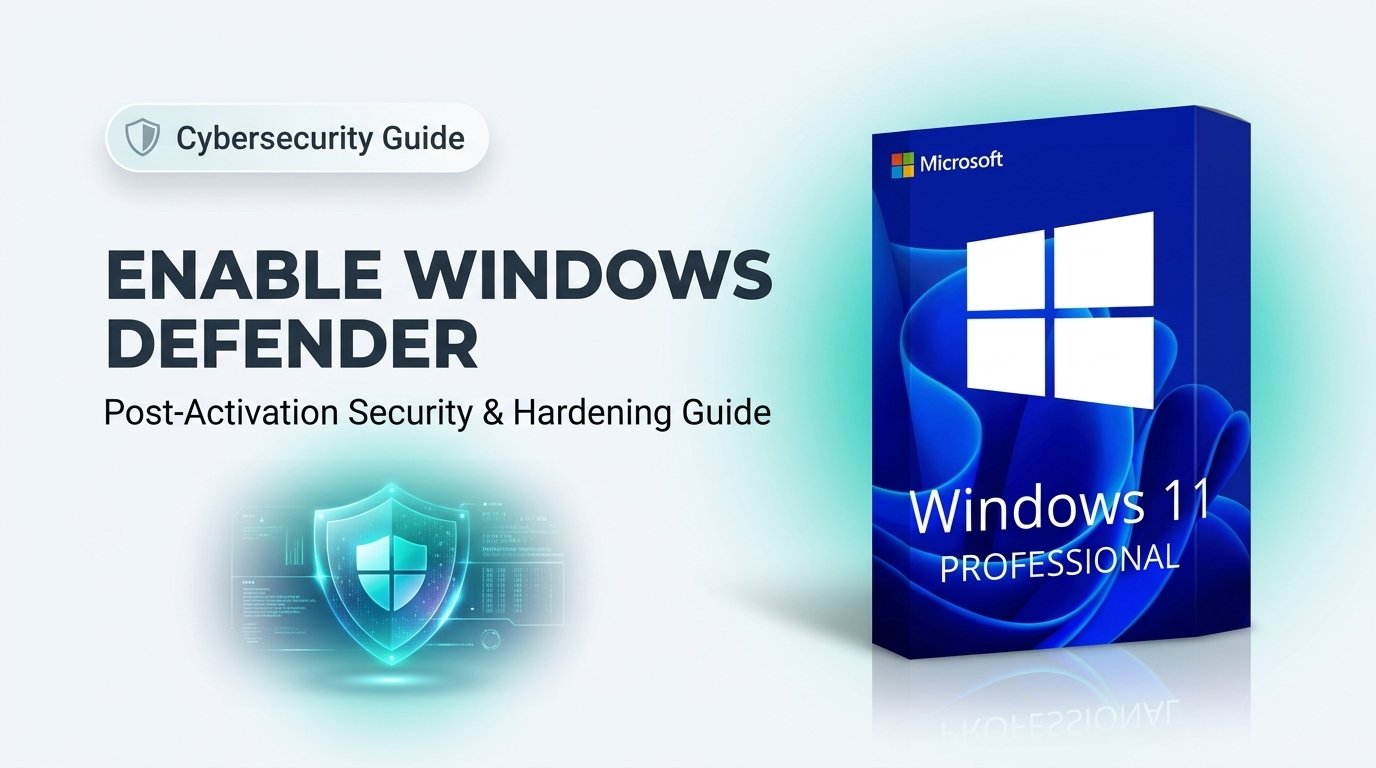
When you run an activator, you are not merely unlocking features; you are actively granting elevated administrative execution to unverified code designed to disable system defenses, inject persistent rootkits, and exfiltrate confidential credentials. In this engineering deep-dive, we deconstruct how crack software weaponizes your computer, why security tools flag them instantly, and how you can safely secure your workstation with a legitimate Windows 11 Professional Retail Key.
- Weaponized Packaging: Virtually 100% of modern public activator downloads bundled on torrent networks and YouTube links contain Trojan droppers (RedLine, LummaC2, Vidar, or XMRig).
- Forced Antivirus Blindspots: Activators require users to disable Windows Defender and add folder exclusions, completely crippling the Antimalware Scan Interface (AMSI).
- Local Rogue Emulators: Tools like KMSPico spawn persistent background daemons on localhost port
1688, intercepting kernel-level licensing RPC calls and hijackingsppsvc.exe. - Safe Lifetime Resolution: Genuine retail licensing binds directly to your Microsoft Account, providing permanent cloud activation, uncompromised BitLocker encryption, and flawless Windows 11 updates.
- 1. The Anatomy of Software Cracks: How Activators Work Under the Hood
- 2. The Deception: Why Activators Force You to Disable Windows Defender
- 3. The 4 Deadliest Malware Payloads Hidden in Cracked Tools
- 4. Instant Purchase: Windows 11 Professional Retail License
- 5. Technical Comparison: Crack Activator Risks vs Genuine Retail Key
- 6. Step-by-Step Security Audit: How to Detect and Remove Crack Infections
- 7. Related Guides & Technical Resources
- 8. Frequently Asked Questions (FAQ)
1. The Anatomy of Software Cracks: How Activators Work Under the Hood
To understand why software activators represent a grave security vulnerability, one must examine how Microsoft’s activation engine operates. In enterprise environments, Microsoft utilizes the Key Management Service (KMS). Legitimate enterprise workstations contact a central internal KMS server hosted within the corporate domain over TCP port 1688 to validate their activation tokens every 180 days.
Unauthorized activators—most notoriously KMSPico, KMSAuto Net, and Re-Loader—exploit this architecture by masquerading as a corporate server on your own local PC. Here is the technical sequence executed when an activator is launched:
- Rogue Service Creation: The installer drops an executable (such as
Service_KMS.exe) and registers it as a high-privilege Windows service running asNT AUTHORITY\SYSTEM. - Port Binding: The service binds to
127.0.0.1:1688, intercepting licensing verification calls initiated by the native Windows Software Protection Platform (sppsvc.exe). - Binary & DLL Patching: Some activators patch core operating system libraries—such as
sppc.dllorslwga.dll—or modify cryptographic digital certificates inC:\Windows\System32\spp\tokens\pkeyconfig. - Scheduled Re-arm Scripts: Because KMS activation automatically expires after 180 days, the utility creates persistent Scheduled Tasks (e.g.,
AutoPico Daily Task) that re-arm the licensing timer upon every system boot.
By modifying core operating system DLLs and running an unmonitored TCP service with SYSTEM privileges, the activator punches an irreversible hole in your operating system’s security perimeter. For a broader analysis of piracy implications, explore our breakdown on what happens if you use a pirated version of Windows.
2. The Deception: Why Activators Force You to Disable Windows Defender
Every activator download package across the internet includes identical setup instructions: “Turn off Windows Defender, disable Real-time Protection, and run as Administrator.”
Piracy communities claim this is a “false positive” caused by Microsoft protecting its revenue. In reality, it is a deliberate deception tactic. Modern malware authors use activator wrappers as Trojan horses specifically because users voluntarily surrender their security controls.
When you disable real-time protection, the activator executes automated administrative PowerShell commands that install permanent exclusions into Microsoft Defender:
Add-MpPreference -ExclusionPath “$env:APPDATA\Local\Programs”
Add-MpPreference -ExclusionExtension “.exe” -ExclusionExtension “.dll”
These exclusions create permanently unmonitored directories on your storage drive. Even after you turn Defender back on, the antivirus engine is blind to those directories, allowing secondary weaponized payloads to execute completely undetected. Authoritative security research from Microsoft Defender Antivirus Documentation emphasizes that arbitrary folder exclusions represent one of the primary attack vectors in modern endpoint intrusions.
3. The 4 Deadliest Malware Payloads Hidden in Cracked Tools
Cybercriminal syndicates rarely distribute “clean” activators. Because the underground distribution networks for cracked software operate with zero accountability, the executable files are consistently re-bundled with lethal malware strains:
1. Information Stealers (Infostealers)
Strains like RedLine, LummaC2, and Vidar execute immediately in memory. They harvest auto-fill passwords, Discord session tokens, saved credit cards from Chrome and Edge, and local cryptocurrency wallet files (MetaMask, Exodus).
2. Hidden Cryptominers (XMRig)
Stealth Monero miners are injected into legitimate system processes like svchost.exe or explorer.exe. They throttle down when Task Manager opens and hijack 80% of CPU/GPU resources when idle, destroying hardware longevity.
3. Remote Access Trojans (RATs)
RATs like AsyncRAT and Remcos establish encrypted outbound reverse command-and-control (C2) shells. Attackers gain silent microphone/webcam surveillance, keystroke logging, and remote file manipulation capabilities.
4. Ransomware Stage Loaders
Initial Access Brokers (IABs) use crack bundles to establish initial persistence across home and small business workstations, later auctioning access to ransomware gangs that deploy full AES-256 storage encryption.
To understand how cybercriminals monetize these entry points, consult our guide on the hidden dangers of pirated Windows and Office and learn why genuine software is your first line of cybersecurity defense.
Windows 11 Professional Retail License Key
100% genuine lifetime retail license. Clean digital entitlement, permanent Microsoft updates, BitLocker encryption, and zero malware risk.
5. Technical Comparison: Crack Activator Risks vs Genuine Retail Key
Here is how running an unauthorized crack utility compares directly to activating a clean, genuine retail license from a verified provider:
6. Step-by-Step Security Audit: How to Detect and Remove Crack Infections
If you or a colleague previously ran an activator tool, follow this technical remediation sequence to inspect your operating system, purge malicious persistent hooks, and restore clean licensing:
Step 1: Audit Antivirus Exclusions
Open PowerShell as Administrator and run the following command to reveal whether malware created hidden exclusion paths:
If you see paths pointing to C:\Windows\AutoKMS, C:\ProgramData\KMSPico, or random Temp folders, remove them immediately using Remove-MpPreference -ExclusionPath "Path".
Step 2: Check for Rogue KMS Daemons on Port 1688
Verify whether an unauthorized background service is intercepting local licensing traffic:
If 127.0.0.1:1688 appears in a LISTENING state on a standalone PC that is not connected to a corporate domain KMS host, an illegal emulator is actively running.
Step 3: Purge Illegal Activation & KMS Server References
Clear out pirated license data and disconnect your operating system from the rogue KMS emulator using the native Windows Software Licensing Management tool:
slmgr /cpky
slmgr /ckms
These commands uninstall the cracked key (/upk), clean the key from the registry (/cpky), and reset the KMS server configuration back to Microsoft defaults (/ckms).
Step 4: Execute Microsoft Defender Offline Scan
Because rootkits can hook system APIs when Windows is running, boot into an isolated offline recovery environment to eliminate kernel-level threats:
Your computer will reboot into the Microsoft Defender Offline scanner, sanitizing the Master Boot Record, registry hives, and protected system volumes.
Step 5: Activate with a Clean Retail License Key
Once sanitized, navigate to Settings > System > Activation > Change Product Key and enter a genuine 25-character retail key. Your system will immediately establish encrypted contact with Microsoft’s official licensing servers, binding permanent digital entitlement to your hardware. Also check our guide on how to tell if your Windows product key is genuine.
7. Related Guides & Technical Resources
Explore our complete library of technical deployment and security guides at the Sorted Keys Documentation Hub: