





Fix “Windows Is Not Activated” Error: Complete Troubleshooting Guide


Quick Answer: The “Windows Is Not Activated” error typically occurs due to hardware changes, network connectivity issues with Microsoft’s activation servers, or entering a product key that doesn’t match your installed Windows edition. The fastest way to fix this is to run the built-in Activation Troubleshooter by navigating to Settings > Update & Security (or System) > Activation and clicking Troubleshoot.
Table of Contents
- 1. Why Does the “Windows Is Not Activated” Error Occur?
- 2. Method 1: Use the Activation Troubleshooter
- 3. Method 2: Re-enter a Valid Product Key
- 4. Method 3: Reset the License via Command Prompt (slmgr)
- 5. Method 4: Reactivating After a Hardware Change
- 6. Video Guide: Removing Activation Errors
- 7. Frequently Asked Questions (FAQ)
Why Does the “Windows Is Not Activated” Error Occur?
Seeing the transparent “Activate Windows” watermark in the bottom right corner of your screen is frustrating. Microsoft applies this watermark and disables personalization settings (like changing your wallpaper or theme) when your operating system fails to verify its digital license with the official Microsoft Activation Servers.
Here are the most common triggers for this activation error:
- Significant Hardware Changes: Replacing your motherboard or CPU often breaks the digital license link.
- Edition Mismatch: Attempting to use a Windows 11 Home key on a system running Windows 11 Pro.
- Server Outages: Temporary network disconnections blocking your PC from pinging Microsoft’s KMS or retail activation servers.
- Expired KMS Licenses: Common if you purchased a PC pre-installed with unauthorized, temporary organization volume licenses.
Method 1: Use the Activation Troubleshooter
Before attempting manual fixes, always let Microsoft’s built-in tool attempt to diagnose and repair the connection.
- Press the Windows Key + I to open Settings.
- Navigate to System > Activation (in Windows 11) or Update & Security > Activation (in Windows 10).
- If your system is not activated, you will see a Troubleshoot option. Click it.
- Follow the on-screen prompts. The tool will check the Microsoft servers for a valid digital license tied to your Microsoft account.
Method 2: Re-enter a Valid Product Key
If the troubleshooter fails, the system might simply be holding onto a generic installation key rather than your actual retail key. You can force the system to re-verify a valid 25-character key.
Need a Genuine License?
If you’ve built a new PC or discovered your current license is a temporary organization key, you will need a legitimate retail license to permanently remove the watermark.
Buy Genuine Windows 11 ProEnsure you are typing the key exactly as it appears on your receipt or email delivery, including the hyphens.
Method 3: Reset the License via Command Prompt (slmgr)
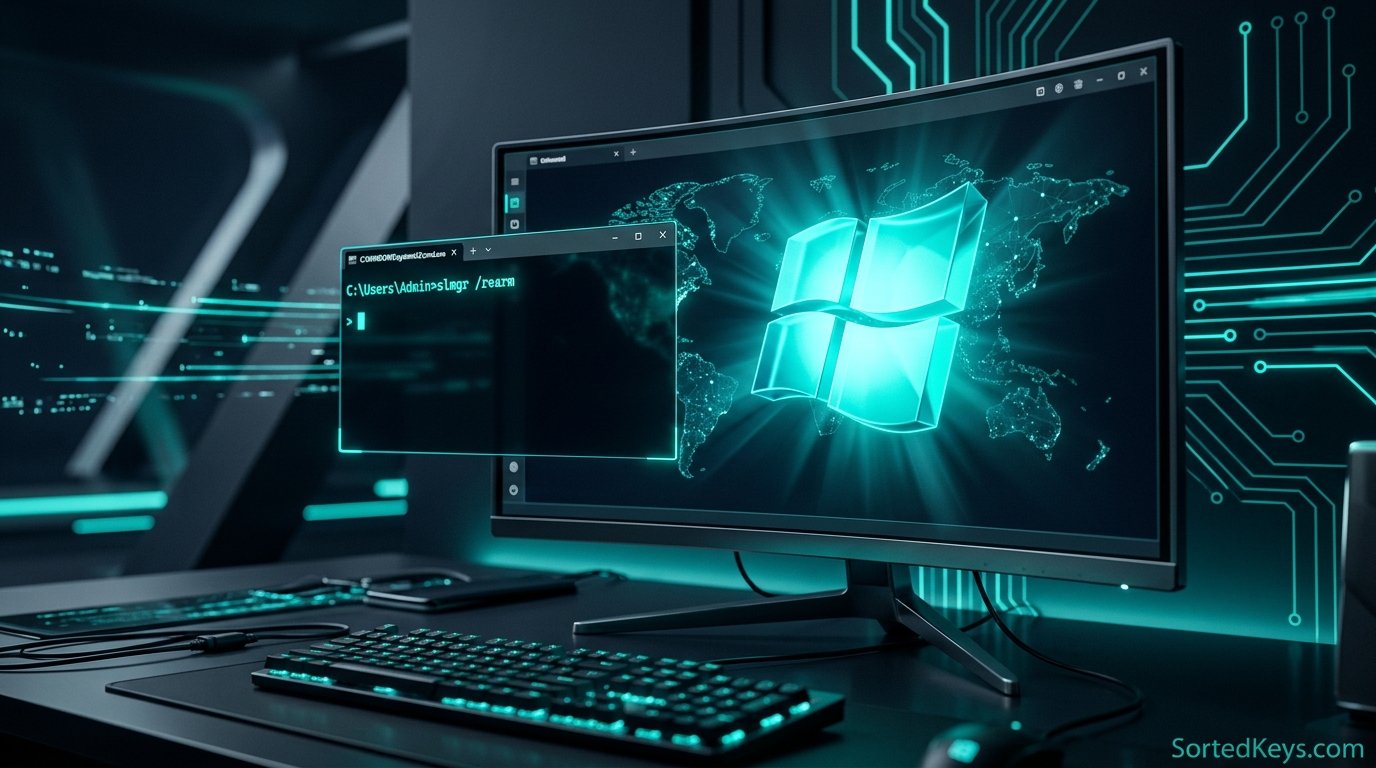
If your system is stuck trying to authenticate an old, expired, or blocked product key, you need to manually wipe it using the Software Licensing Management Tool (slmgr).
- Click the Start menu, type cmd, right-click Command Prompt, and select Run as administrator.
- Type the following command to uninstall the current corrupted key and press Enter:
slmgr.vbs /upk - Type this command to clear the registry of the old key and press Enter:
slmgr.vbs /cpky - Finally, enter your new, genuine product key using this command (replace the X’s with your key) and press Enter:
slmgr.vbs /ipk XXXXX-XXXXX-XXXXX-XXXXX-XXXXX - Force the activation by typing:
slmgr.vbs /ato
You should see a popup stating “Product activated successfully.” Restart your PC to remove the watermark permanently.
Method 4: Reactivating After a Hardware Change
If you recently upgraded your PC (like swapping the motherboard), Windows will flag the device as a “new computer” and deactivate it.
To fix this, you must have previously linked your digital license to your Microsoft Account:
- Run the Activation Troubleshooter as described in Method 1.
- Select the option that says “I changed hardware on this device recently.”
- Sign in with your Microsoft account credentials.
- Select the device you are currently using from the list of linked devices and check the box that says “This is the device I’m using right now.”
- Click Activate.
Video Guide: Removing Activation Errors
If you prefer a visual walkthrough of the command prompt method to clear out organization errors (like “We can’t connect to your organization”), watch this helpful tutorial:
Frequently Asked Questions (FAQ)
Windows can suddenly deactivate if it detects a major hardware change (like a new motherboard), if an update corrupts the licensing files, or if you were previously using a temporary KMS volume license that has finally expired.
No. Using third-party activator scripts (like KMSpico) is highly dangerous. These tools often bundle malware, ransomware, or cryptocurrency miners deep within your system registry. It is always safer to purchase a genuine license key.
Technically, yes. You can use an unactivated version of Windows indefinitely. However, you will be permanently stuck with the “Activate Windows” watermark on your screen, and you will be completely locked out of all Personalization settings.